



Certified Pre-Owned vs Used Cars: What Buyers Should Know Before Choosing
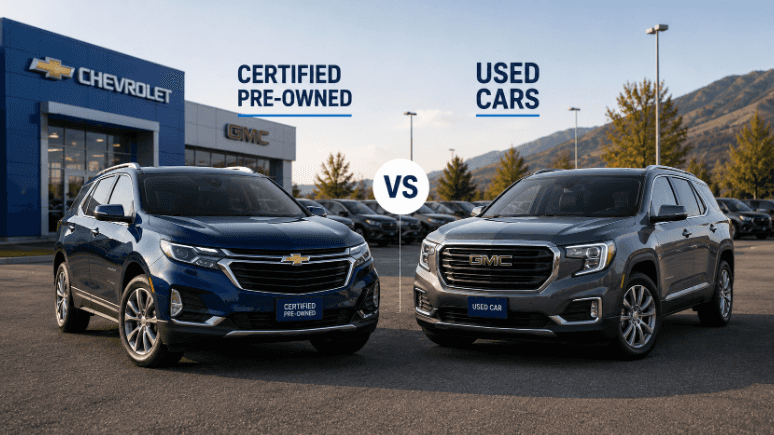
Trying to understand what makes a certified pre-owned car different from a regular used car?
Both are pre-owned, but the difference is in what happens before the vehicle is listed for sale.
A certified pre-owned vehicle goes through a defined inspection and certification process before it earns the CPO label. A regular used car may still be reliable, but its inspection details, warranty coverage, mileage, and condition can vary more from vehicle to vehicle.
To make the choice easier, we’ve compared both options by inspection, price, warranty support, condition, and overall value.
| Quick Answer: Certified Pre-Owned vs Used
A certified pre-owned vehicle is a used vehicle that has passed set inspection and certification standards. It may also include added warranty coverage, depending on the program. A used car has had a previous owner but may not include the same certification process, inspection standards, or warranty support. In short, certified pre-owned offers more built-in confidence, while used gives you more choice and price flexibility. |
| If You Want… | Better Starting Point |
|---|---|
| Added inspection confidence | Certified pre-owned |
| More price flexibility | Used |
| Possible warranty support | Certified pre-owned |
| Wider inventory selection | Used |
| A newer or lower-mileage option | Certified pre-owned |
| More model years and mileage choices | Used |
What Is a Used Car?
A used car is any vehicle that has had a previous owner. It may have been traded in, returned after a lease, bought from another owner, or added to dealership inventory from another source.
Used cars can vary a lot from one vehicle to another. One used car may be a recent model with low mileage, while another may be older, higher-mileage, and priced lower. That variety is one of the main reasons many buyers shop used.
A used car can vary by:
- Model year
- Mileage
- Trim level
- Vehicle condition
- Service history
- Previous ownership
- Warranty status
- Features and technology
- Price
A used vehicle can be a smart option when you want more choices and a wider range of prices. The key is to review the specific vehicle, not just the category. Look at the history, condition, mileage, inspection details, and available warranty or protection options.
| Looking for Used Cars? |
What Is a Certified Pre-Owned Car?
If you are asking what does certified pre owned mean, it is still a used car. The difference is that it must meet certain certification standards before it can be listed as certified.
Depending on the program, a certified pre-owned vehicle may need to meet requirements for age, mileage, vehicle history, mechanical condition, and appearance. It may also go through a multi-point inspection and reconditioning process before sale.
A certified pre-owned vehicle may include:
- Mileage and model-year limits
- Vehicle history review
- Multi-point inspection
- Reconditioning when needed
- Warranty coverage
- Roadside assistance or program benefits
- Manufacturer or dealer-backed certification standards
The exact benefits can vary by brand and certification program, so it is always worth asking what is included with the specific vehicle you are considering.
| Compare the Available CPO Options |
What Does the CPO Inspection Usually Cover?
The exact certified pre owned inspection checklist can vary by brand or dealer program, but it usually focuses on the vehicle’s condition, safety, performance, and history.
| Inspection Area | What Buyers Should Know |
|---|---|
| Engine & transmission | Checks how the vehicle starts, runs, shifts, and performs during normal driving. |
| Brakes & tires | Helps spot wear that could affect safety or lead to near-term replacement costs. |
| Steering & suspension | Reviews how the vehicle handles, turns, and rides on different road conditions. |
| Battery & fluids | Checks basic maintenance items that affect daily reliability. |
| Exterior condition | Looks at paint, body panels, lights, mirrors, glass, and visible damage. |
| Interior condition | Reviews seats, controls, windows, locks, climate system, and cabin features. |
| Safety features | Checks key safety items such as airbags, seat belts, warning lights, cameras, and driver-assist features. |
| Technology features | Reviews touchscreen, Bluetooth, audio, backup camera, charging ports, and other tech functions. |
| Vehicle history | Looks at title status, mileage, ownership history, reported accidents, and service records. |
| Road test | Confirms how the vehicle feels while braking, accelerating, shifting, steering, and driving. |
Before buying any used or certified pre-owned vehicle, it is also helpful to check for open safety recalls through the NHTSA recall lookup.
What Is the Difference Between Certified Pre Owned and Used Cars
The biggest difference is not previous ownership. Both certified pre-owned and used vehicles have had a previous owner.
When looking at used vs certified pre owned, the main tradeoff is simple: used cars usually offer more options, while certified pre-owned cars usually offer more structure and reassurance.
Have a look:
| Factor | Certified Pre-Owned Car | Used Car |
|---|---|---|
| Previous ownership | Has had a previous owner | Has had a previous owner |
| Certification | Must meet certification standards | Not required |
| Inspection | Usually includes a defined inspection process | The inspection process can vary |
| Mileage | Often must fall within program limits | Can range from low to high |
| Model year | Usually, newer vehicles qualify | Can include older and newer vehicles |
| Warranty | May include added warranty benefits | Coverage varies by vehicle |
| Price | Usually costs more than a similar used car | Often more budget-friendly |
| Selection | More limited because vehicles must qualify | Usually broader |
| Condition | Must meet program standards | Can vary more |
| Best for | Buyers wanting added confidence | Buyers want more choice and price flexibility |
A certified pre-owned vehicle may cost more because it has to meet certain requirements. A regularly used vehicle may give you more room to compare price, mileage, trim level, and model year.
Neither option is automatically better for everyone. The better fit depends on the specific vehicle and what matters most to you.
Pros and Cons of Certified Pre-Owned Cars
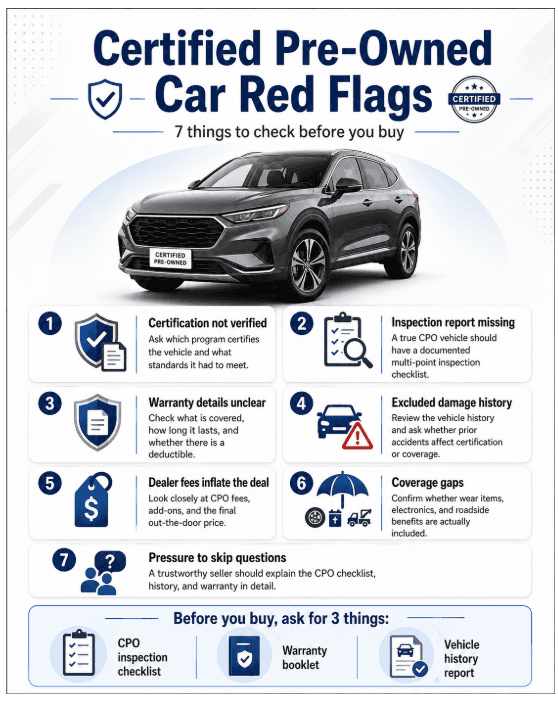
A certified pre-owned car is still a used car, but it has passed extra checks before being listed as certified. This can make the buying process easier if you want fewer unknowns.
| Pros | Cons |
|---|---|
| More inspection confidence: The vehicle has gone through a certification inspection before sale. | Usually costs more: A CPO vehicle often has a higher price than a similar non-certified used car. |
| Possible warranty support: Some CPO vehicles include added warranty coverage or program benefits. | Smaller selection: Not every used car qualifies for certification, so choices may be limited. |
| Newer or lower-mileage options: Many CPO programs have age and mileage limits. | Benefits can vary: Certification details depend on the manufacturer or program. |
| Reconditioning before sale: Needed repairs or updates may be completed before certification. | Still pre-owned: You should still review mileage, condition, history, and coverage details. |
A certified pre-owned car may fit better if you want added inspection standards and possible warranty support before buying.
Pros and Cons of Used Cars
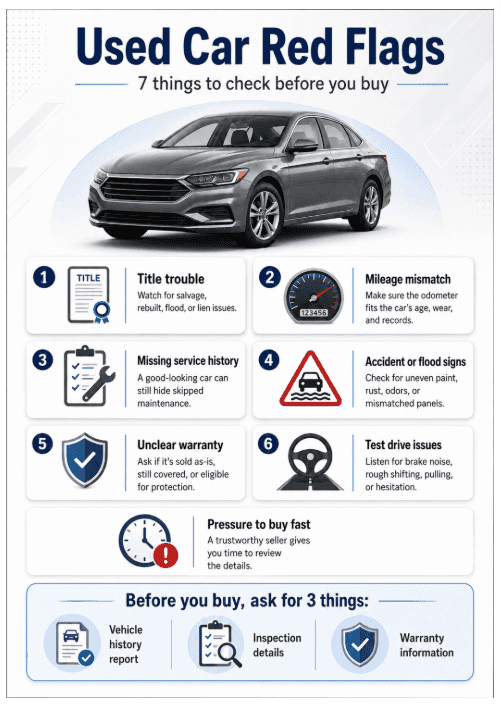
A used car is the broader category. It has had a previous owner, but it may not go through the same certification process as a CPO vehicle.
| Pros | Cons |
|---|---|
| More price options: Used cars usually offer a wider price range. | Conditions can vary more: Each vehicle needs to be reviewed carefully. |
| More vehicles to compare: You may find more choices by year, mileage, trim, and body style. | Warranty may vary: Some used cars have coverage, while others may have limited or no coverage. |
| More flexibility: You can compare older, newer, lower-mileage, or lower-priced options. | Inspection details may differ: A regularly used car may not have the same certification inspection. |
| Strong value when well maintained: A used car can be a smart buy if its history, mileage, and condition are good. | More research may be needed: Review the vehicle history, recall status, inspection details, and test drive results. |
A used car may fit better if you want more choices, more price flexibility, and a wider range of vehicles to compare.
If you want to compare different price ranges, model years, and mileage options, check available pre-owned vehicle specials at RivertonELKO.
What Buyers Should Compare Before Deciding
When comparing certified pre-owned and used cars, the label is only one part of the decision. The actual vehicle matters more.
| What to Compare | Why It Matters |
|---|---|
| Mileage | Affects value, wear, maintenance, and long-term ownership. |
| Model year | Impacts features, technology, safety equipment, and warranty status. |
| Vehicle history | Helps you understand title status, accident history, ownership records, and service details. |
| Inspection details | Shows what was checked before sale. |
| Warranty coverage | Helps you understand what may be protected after purchase. |
| Condition | Affects possible repair and maintenance costs. |
| Total cost | Includes price, taxes, fees, financing, insurance, and possible protection plans. |
| Test drive feel | Helps you check comfort, braking, steering, visibility, noise, and technology. |
The FTC Buyers Guide is a useful reference because it explains how warranty information should be shown on used vehicles sold by dealers. For extra buying checks, Consumer Reports also offers a practical guide on how to inspect a used car.
Tips for First-Time Buyers
If this is your first time buying a vehicle, do not compare certified pre-owned and used cars only by the listed price.
A lower price can look attractive, but the better choice is the one that fits your budget after insurance, taxes, registration, maintenance, and possible repair costs.
Use this section as a practical filter before you narrow your options.
| What to Check | Why It Matters for First-Time Buyers |
|---|---|
| Total monthly cost | Your payment is only one part of the cost. Add insurance, fuel, maintenance, taxes, and registration before deciding what feels affordable. |
| Mileage vs price | A cheaper used car with high mileage may cost less upfront, but it could need maintenance sooner. A CPO vehicle may cost more, but offer added coverage. |
| Warranty details | Do not assume every vehicle has the same protection. Ask what is covered, how long coverage lasts, and what repairs are excluded. |
| Inspection report | For CPO vehicles, ask what was checked. For used vehicles, ask whether the dealership completed an inspection and what condition items were found. |
| Vehicle history | Look for accident history, title status, ownership records, and service history. This helps you understand how the vehicle was used before. |
| Must-have features | Separate needs from wants. Safety features, seating, cargo space, fuel economy, and towing needs should come before extras. |
| Test drive feel | Do not rush the test drive. Check braking, steering, visibility, seat comfort, noise, controls, and how the vehicle feels in normal driving. |
FAQs
Is certified pre-owned better than used?
It may be better if you want added inspection confidence and possible warranty support. Used may be better if you want more choices, lower pricing, and more flexibility.
Are certified pre-owned cars worth it?
They can be if the inspection, warranty support, and added confidence justify the higher price. A regular used car may offer better value if price and selection matter more.
Does certified pre-owned always include a warranty?
Not always. Many CPO programs include warranty benefits, but coverage can vary. Always ask what is covered, how long it lasts, and whether exclusions apply.
What should I check before buying a certified pre-owned car?
Ask for the inspection report, warranty details, vehicle history, mileage, reconditioning records, recall status, and what the certification actually covers.
Should I pay more for a certified pre-owned car or choose a cheaper used car?
Pay more for CPO if warranty support and inspection confidence matter. Choose used if the vehicle has a good history, fair mileage, strong condition, and better pricing.
0 comment(s) so far on Certified Pre-Owned vs Used Cars: What Buyers Should Know Before Choosing